Course Objectives
Challenges, Opportunities, and the Environmental Influences in the Administration and Management of Human Service Programs
- Describe current trends in the human service field.
- Define terminology within human service programs administration and management.
- Assess unique administration and management challenges and opportunities specific to human service programs.
- Identify characteristics associated with successful human service programs.
- Describe the importance of an environmental analysis.
Classical and Contemporary Theories Applied Within Organizational Design
- Assess the application of classical theories in human service organizations.
- Apply contemporary theories to human service organizations.
- Differentiate between horizontal and top down organizational models.
- Delineate elements of an empowerment approach to social service management processes.
Operations and Human Resource Management
- Identify elements of agency operations.
- Describe risk management strategies in the human service agency context.
- Describe budget development and management processes.
- Explain resource acquisitions through grant writing, contracts, and contributions.
- Explain development and management aspects of human resources.
Supervision, Program Design, and Evaluation in Human Service Organizations
- Identify supervisory roles, processes, and challenges.
- Apply theories of motivation to human service delivery systems.
- Explain the role that information systems and technology play in human service program evaluation.
- Describe the purpose of program evaluation in human service programs.
Leadership, Change, and Effective Management in Human Service Programs: An Emphasis on Organizational Efficacy
- Differentiate between the diverse leadership models.
- Apply theories of leadership to human service organizations.
- Apply a systems perspective to administration and management of human service programs.
Week 1: Challenges, Opportunities, & the Environmental Influences in the Administration & Management of Human Services Programs
Human Service Programs: Commonalities & Successes Paper
Write a 350- to 700-word paper on what makes human service organizations unique from organizations in the general business world. Examples of human service organizations include the Department of Social Services, mental health agencies, adoption agencies, and Area Agencies on Aging.
- Include the common denominator or central focus of all human service programs.
- Describe trends in the human service field.
- Identify qualities of human service agencies associated with and that contribute to success.
Week 2: Classical & Contemporary Theories Applied Within Organizational Design
Empowerment Approach to Human Service Management
Review the 12 principles presented by Hardina et al. in the section titled "Humans Service Organizations and Empowerment" in Ch. 4 of Management of Human Service Programs. Additional resources may
be used.
Discuss the principles that characterize an empowerment approach to human service management.
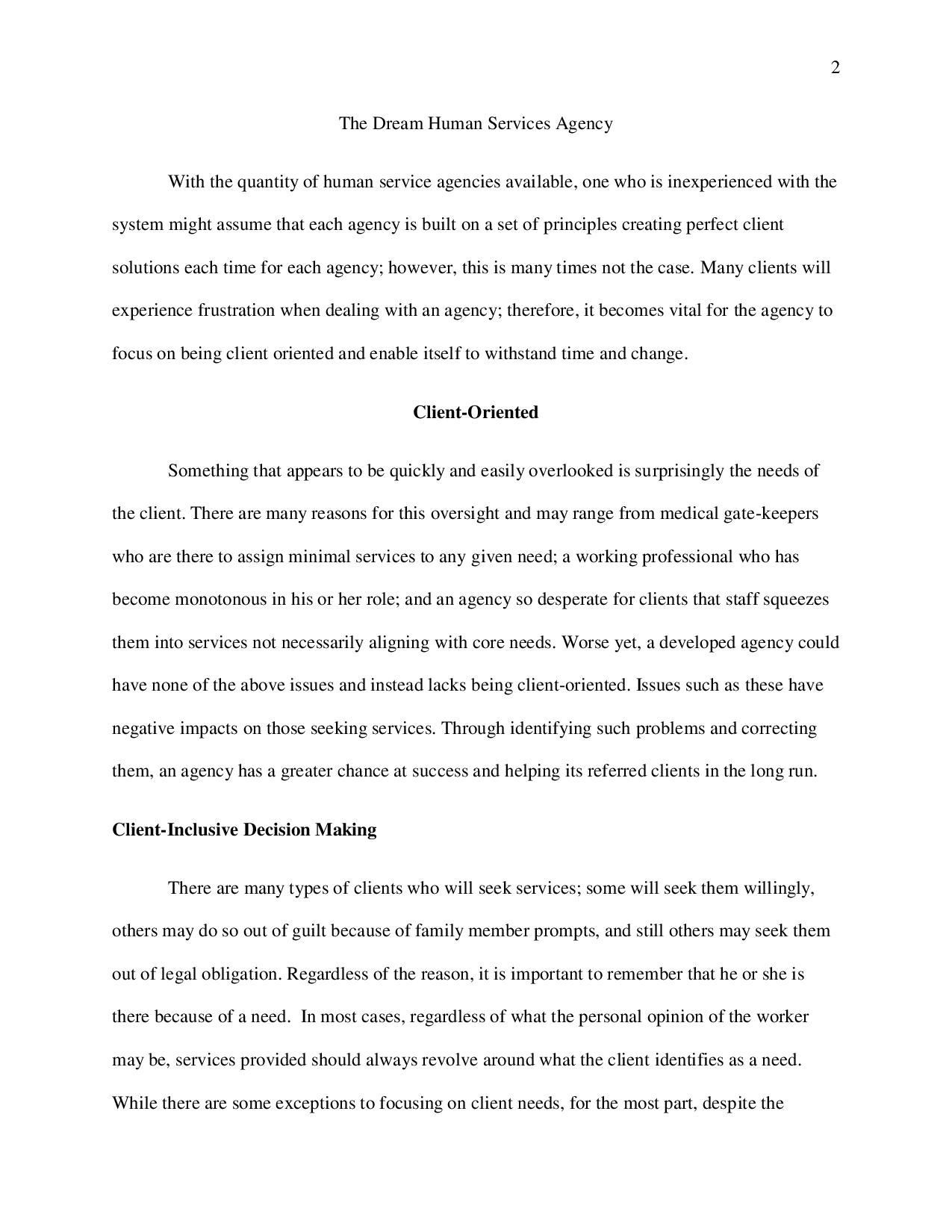
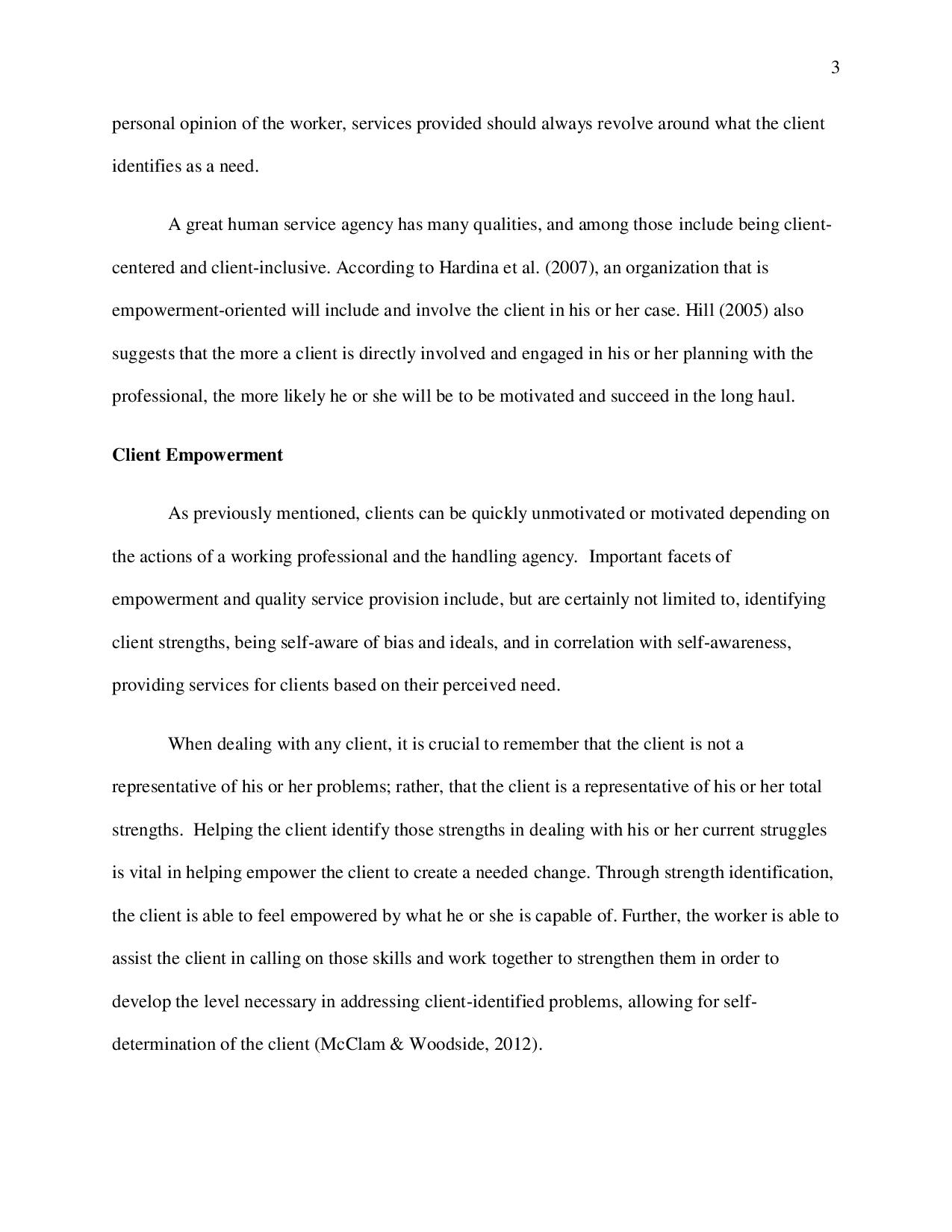
Evaluate how you might apply these principles to the developmental processes of your own Ideal human service organization.
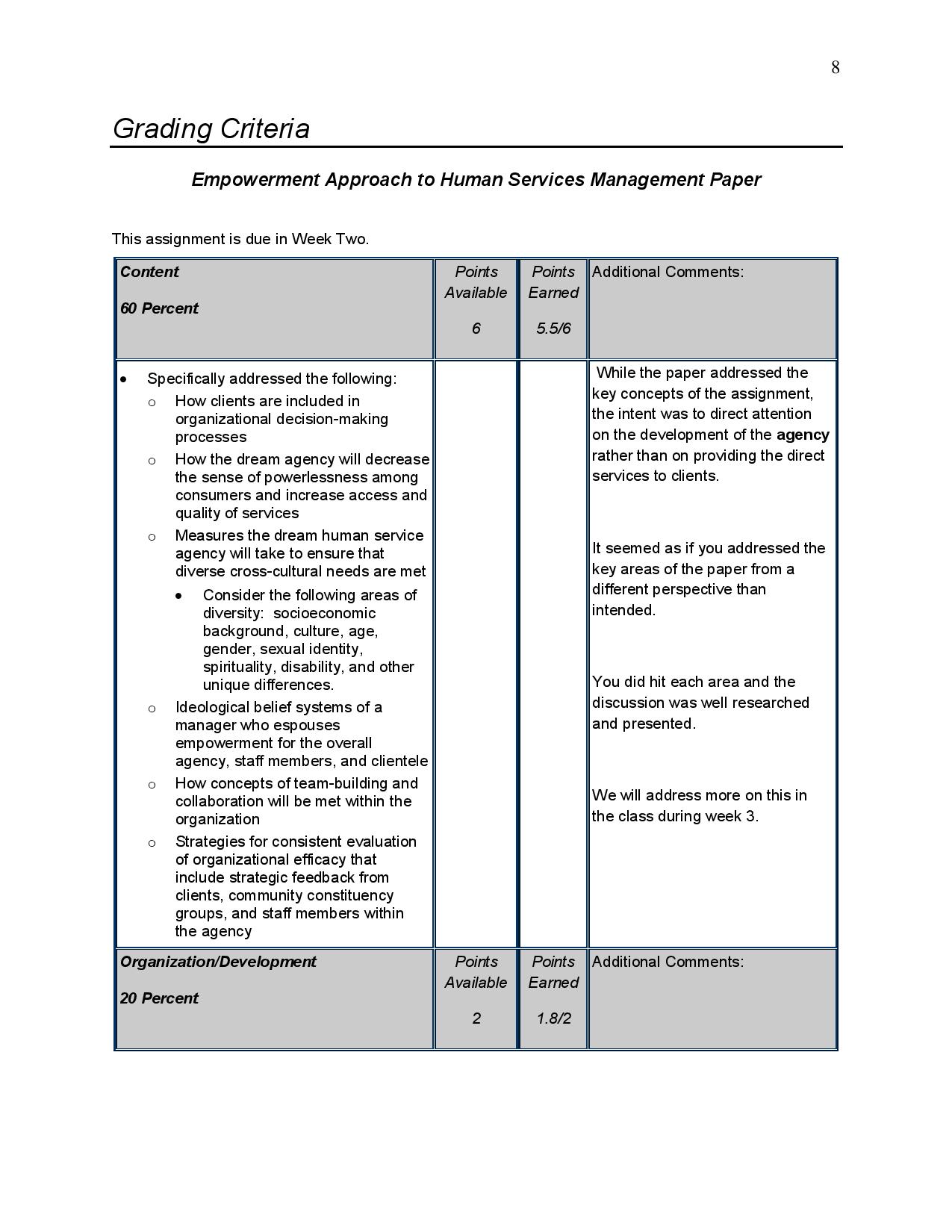
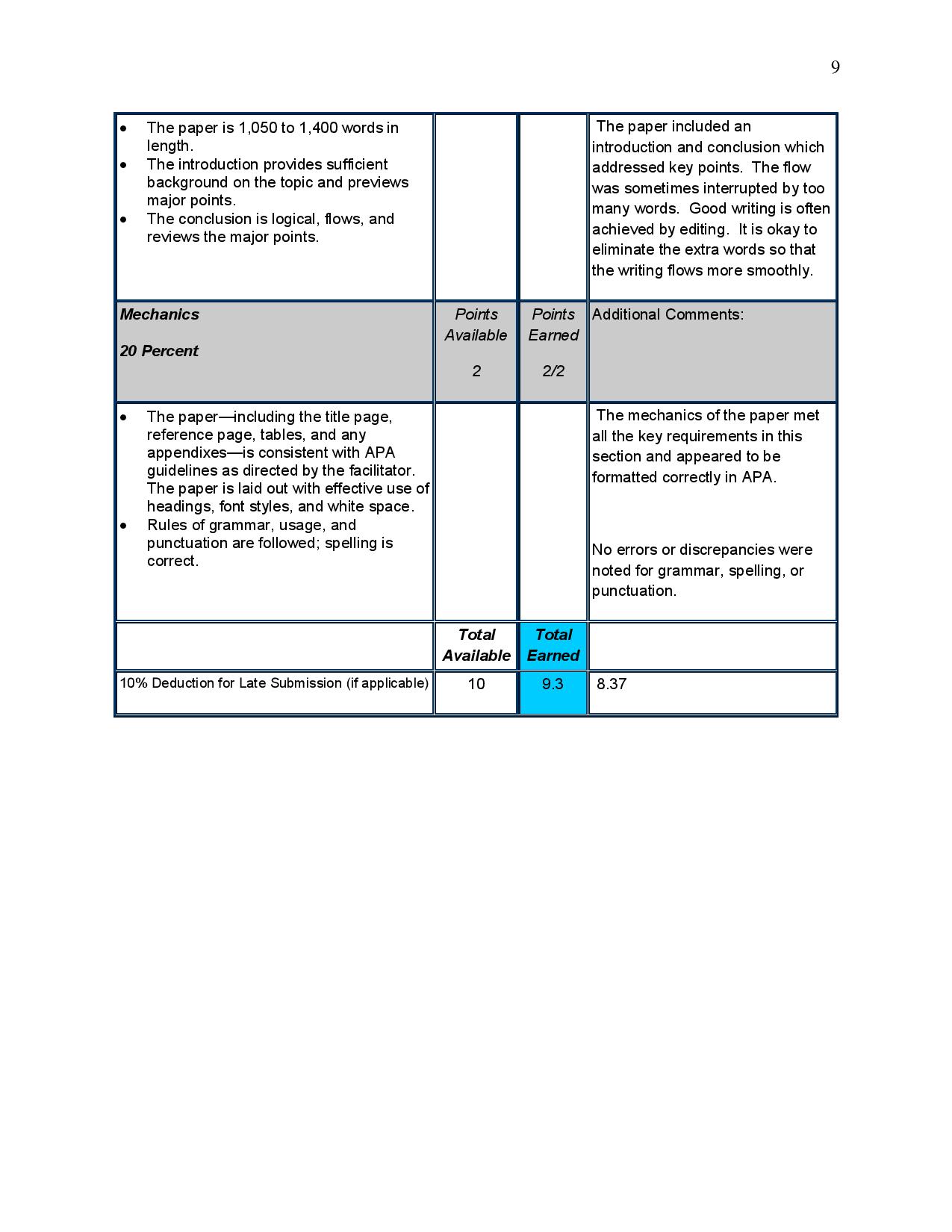
Write a 1,050- to 1,400-word paper that applies the principles presented by Hardina et al. to your ideal human service organization.
Specifically, address the following:
- How clients will be included in the organizational decision-making processes
- How your ideal agency will decrease a sense of powerlessness among consumers and increase access and quality of services for clientele
- The measures your ideal human service agency will take to ensure that diverse cross-cultural needs are met
- The following areas of diversity: socioeconomic background, culture, age, gender, sexual identity, spirituality, disability, and other unique differences
- The ideological belief systems of a manager who espouses empowerment for the overall agency, staff members, and clientele
- How the concepts of team building and collaboration are met within the organization
- The strategies for consistent evaluation of organizational efficacy that includes strategic feedback from clients, community constituency groups, and staff members within the agency
Week 3: Operations & Human Resource Management
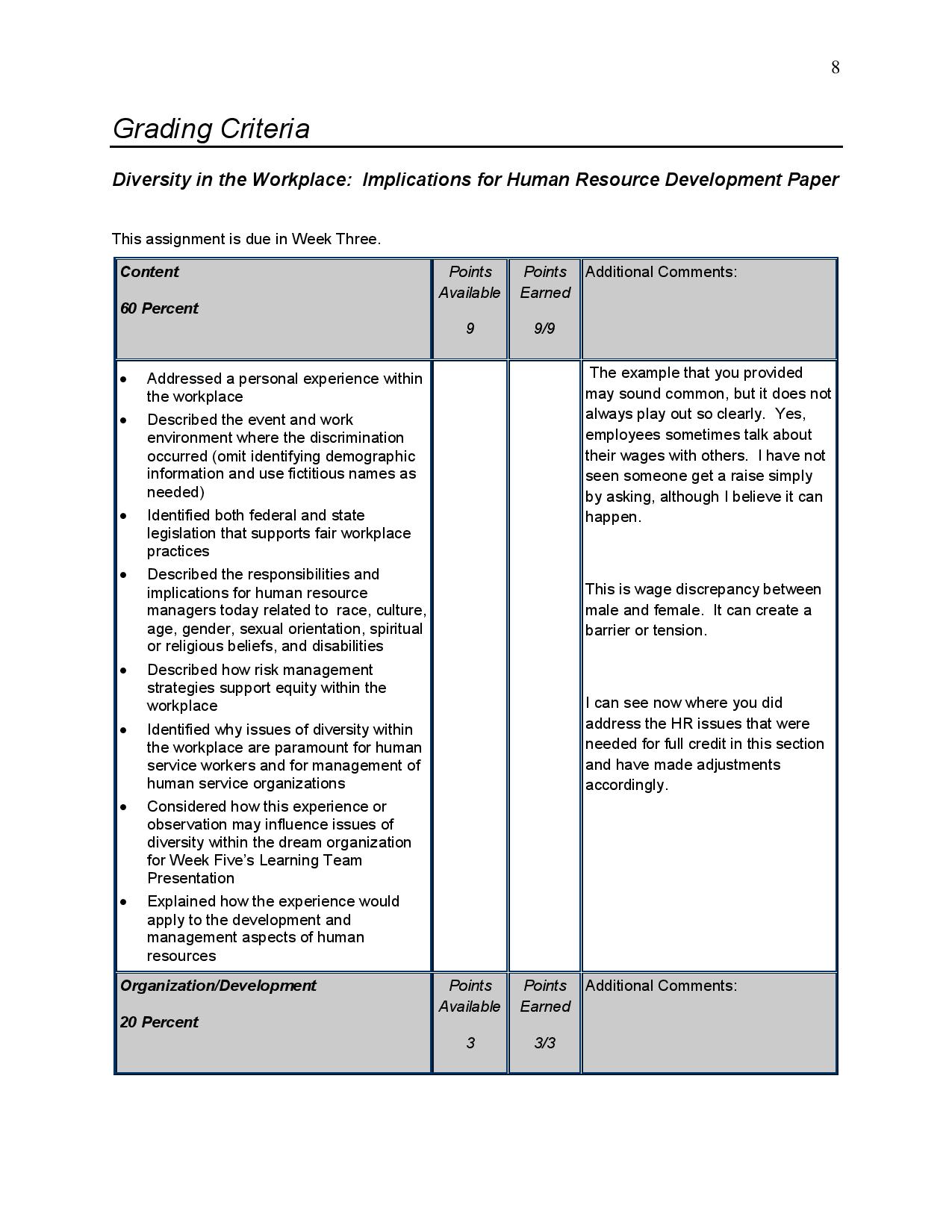
Diversity in the Workplace: Implications for Human Resource Development
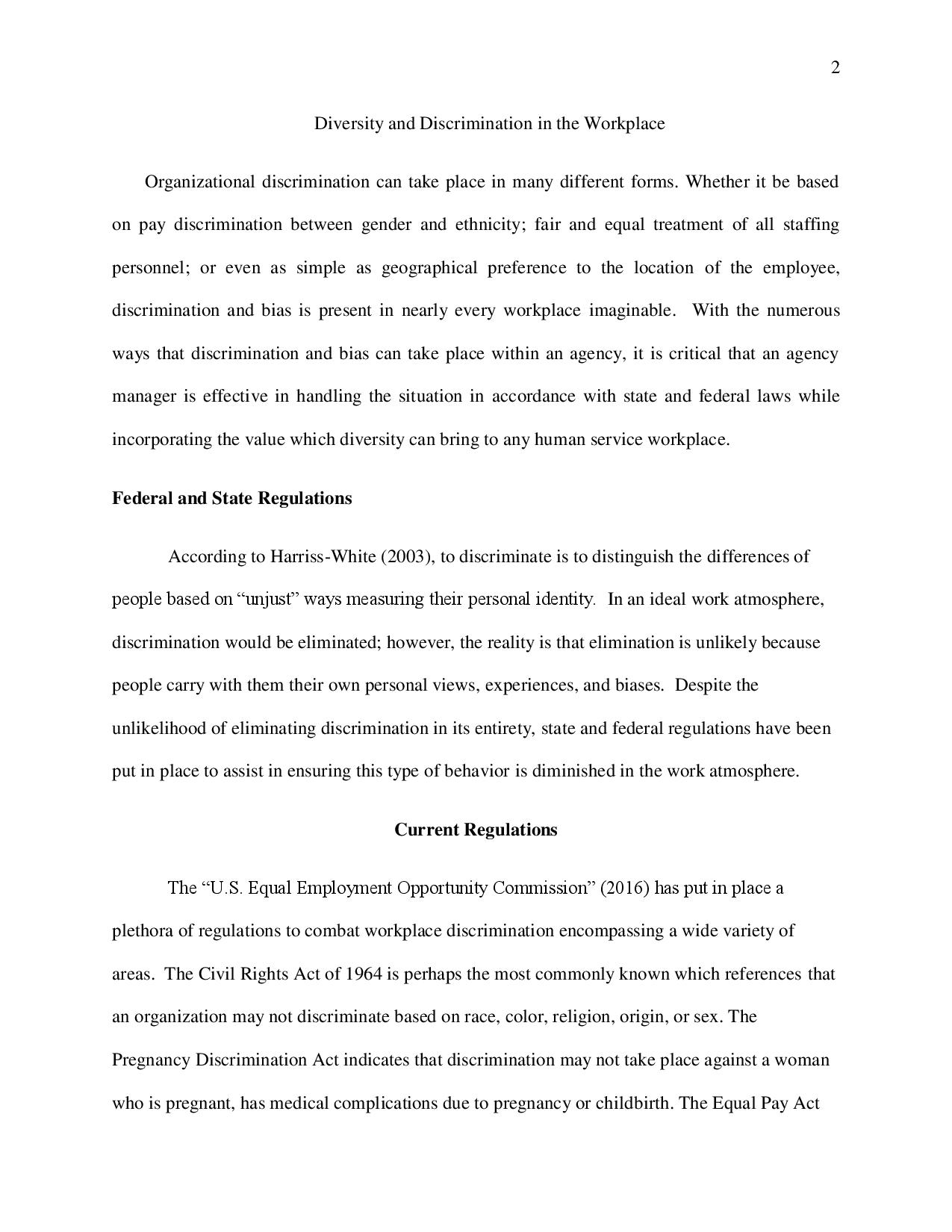
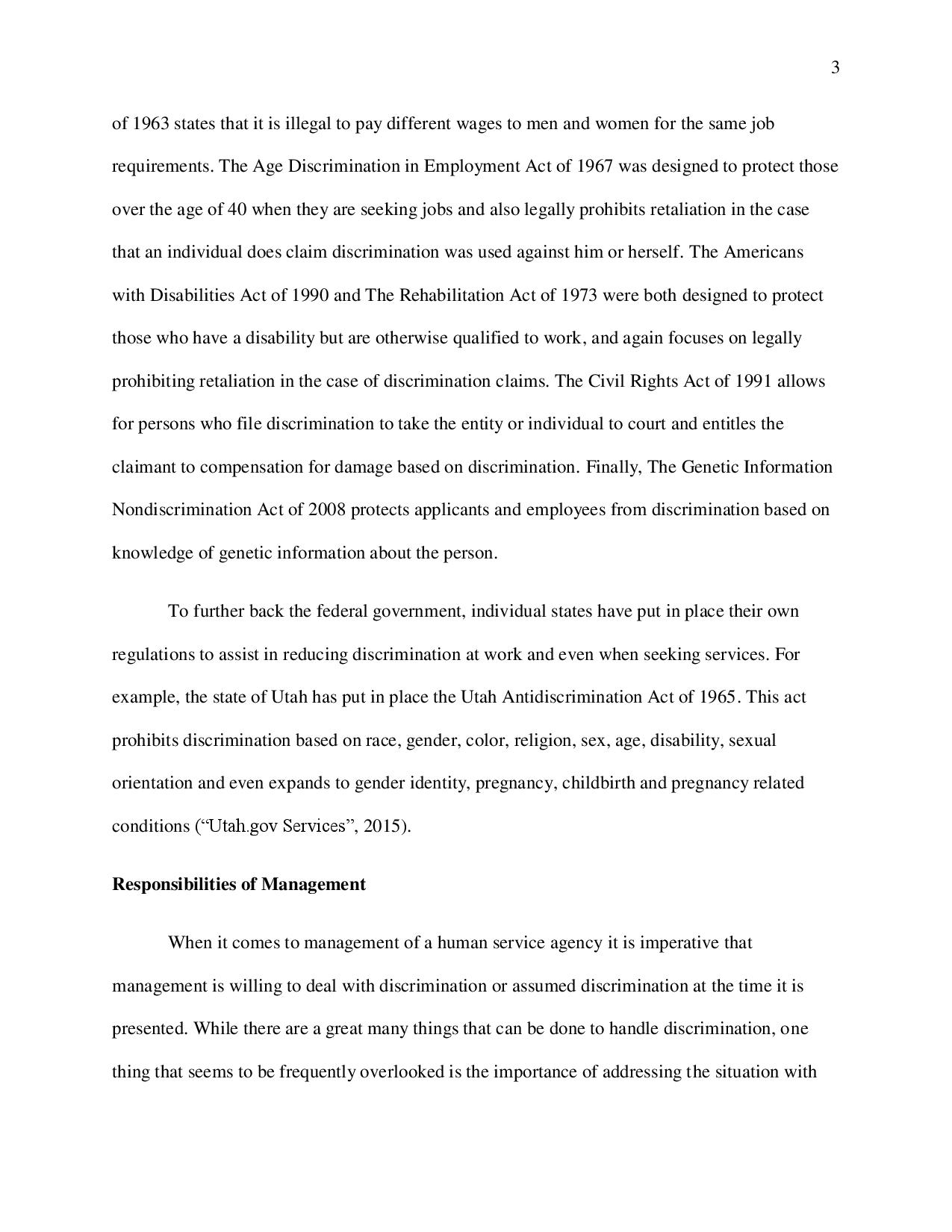
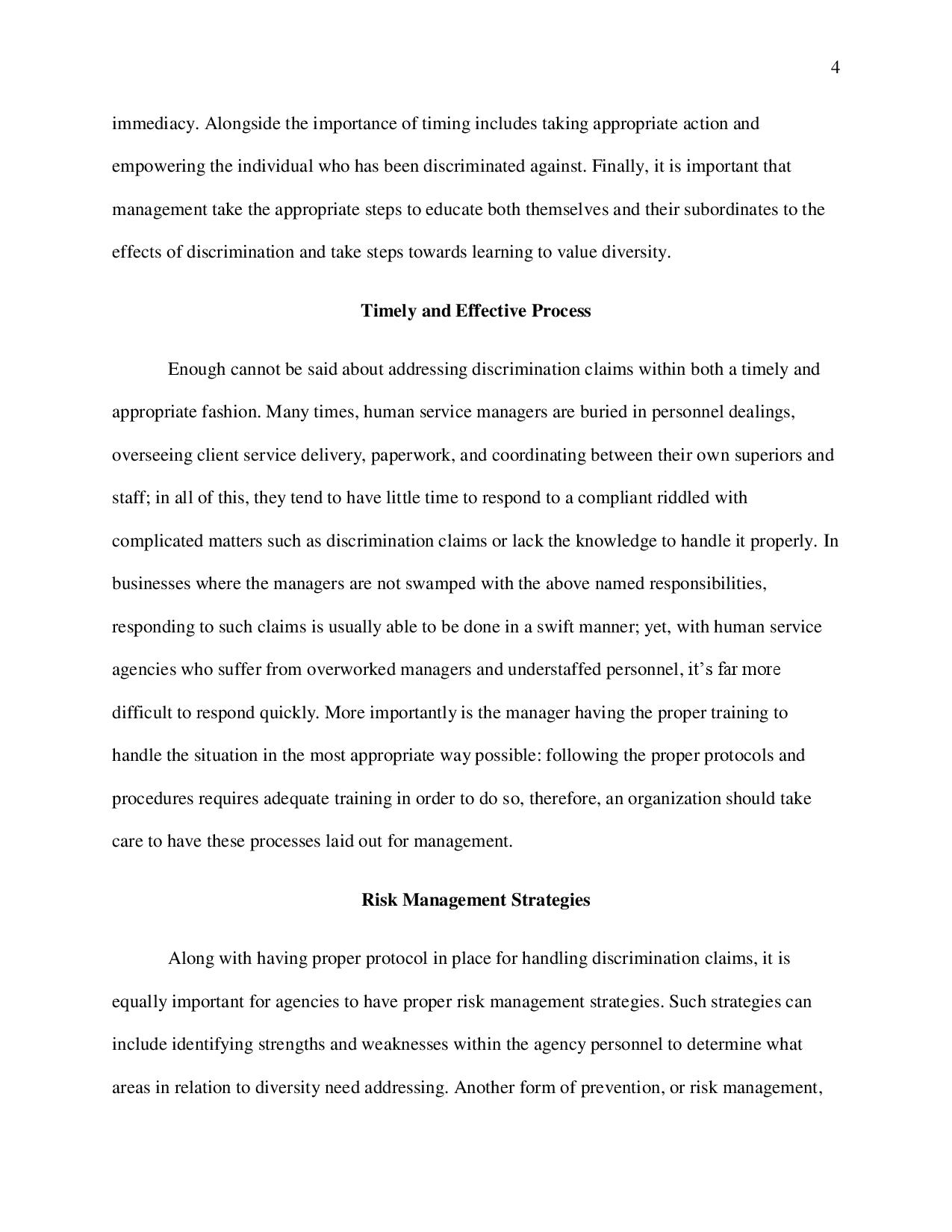
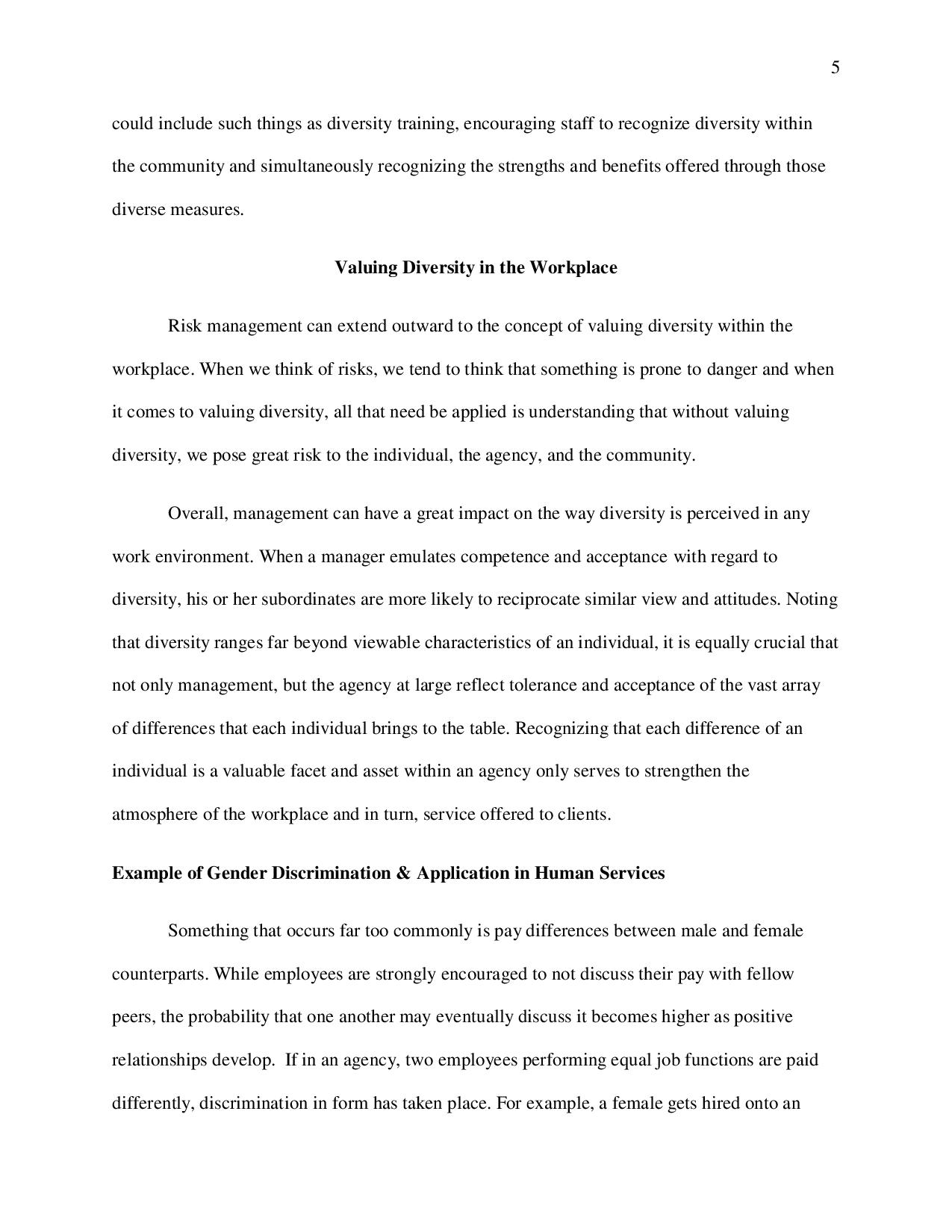
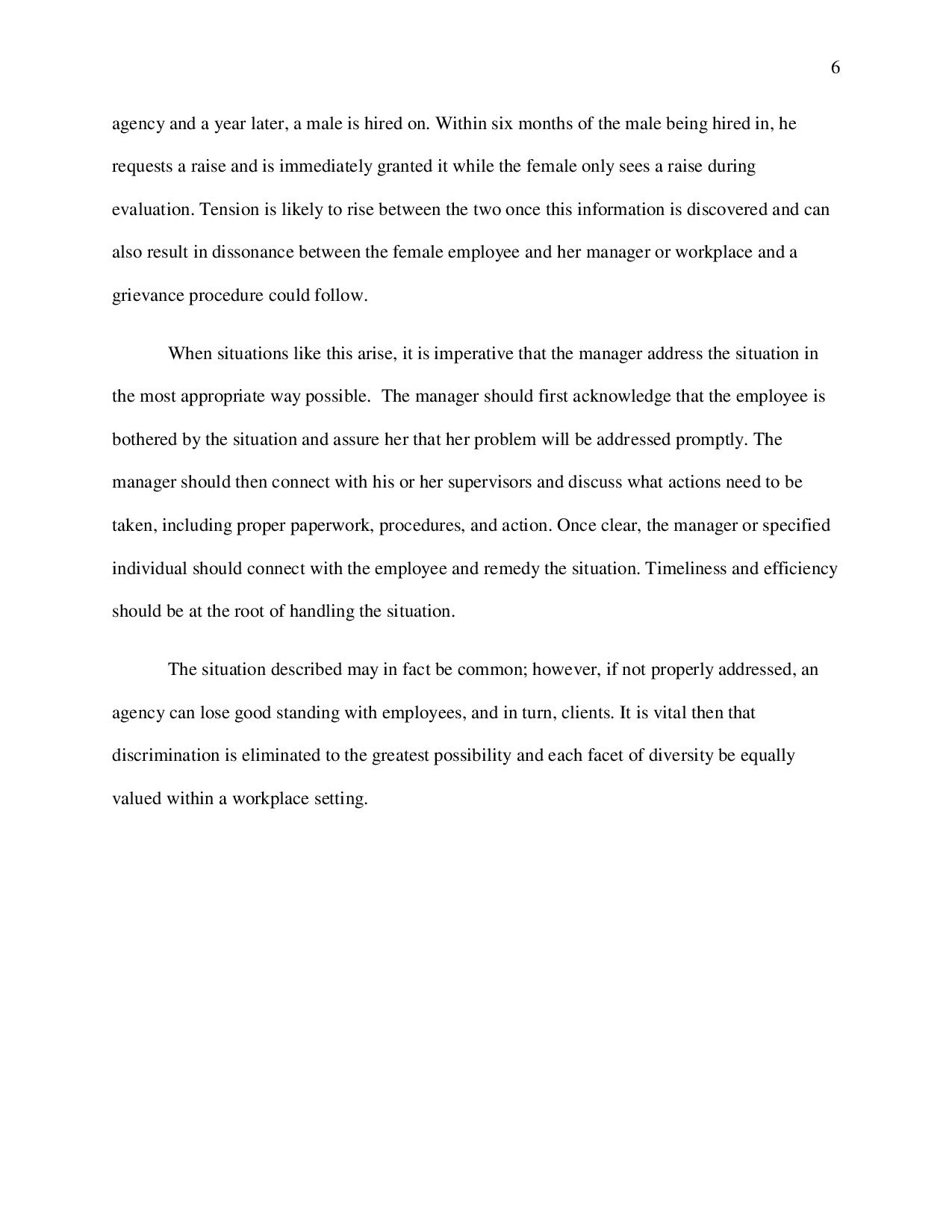
Write a 1,050- to 1,400-word paper on diversity in the workplace and its implications for human resource development.
Address a time at your workplace you experienced or observed organizational discrimination. Include the following:
- A brief description of the event and the work environment the discrimination occurred (Omit identifying demographic information and use fictitious names as needed.)
- Federal and state legislation that supports fair workplace practices
- The responsibilities of human resource managers and their implications concerning race, culture, age, gender, sexual orientation, spiritual or religious beliefs, and disabilities
- How risk management strategies support equity within the workplace
- Why issues of diversity within the workplace are paramount for human service workers and for management of human service organizations
- How this experience or observation may influence issues of diversity within your dream organization for Week Five’s Learning Team Presentation
- How this would apply to the development and management aspects of human resources
Week 4: Supervision, Program Design, & Evaluation in Human Service Organizations
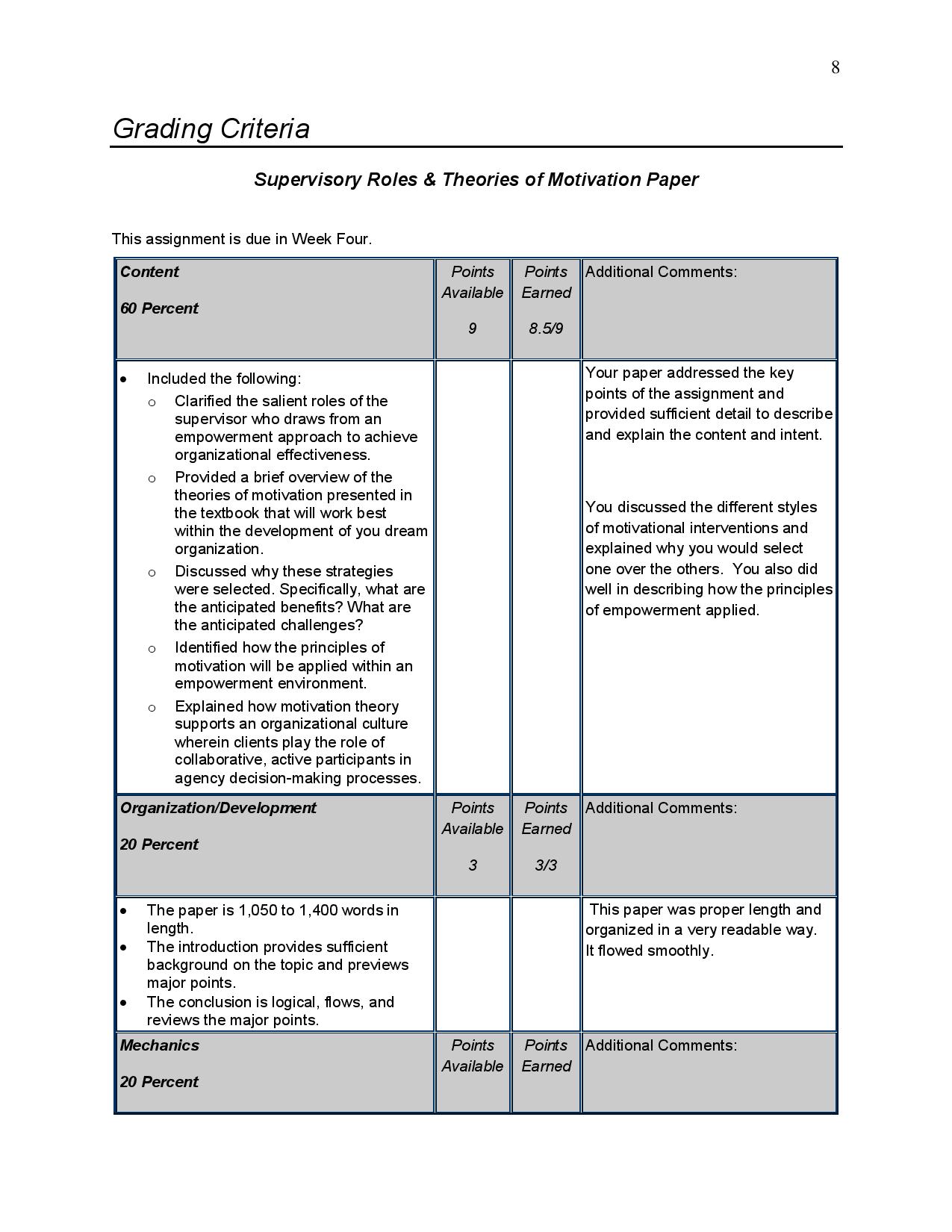
Supervisory Roles & Theories of Motivation
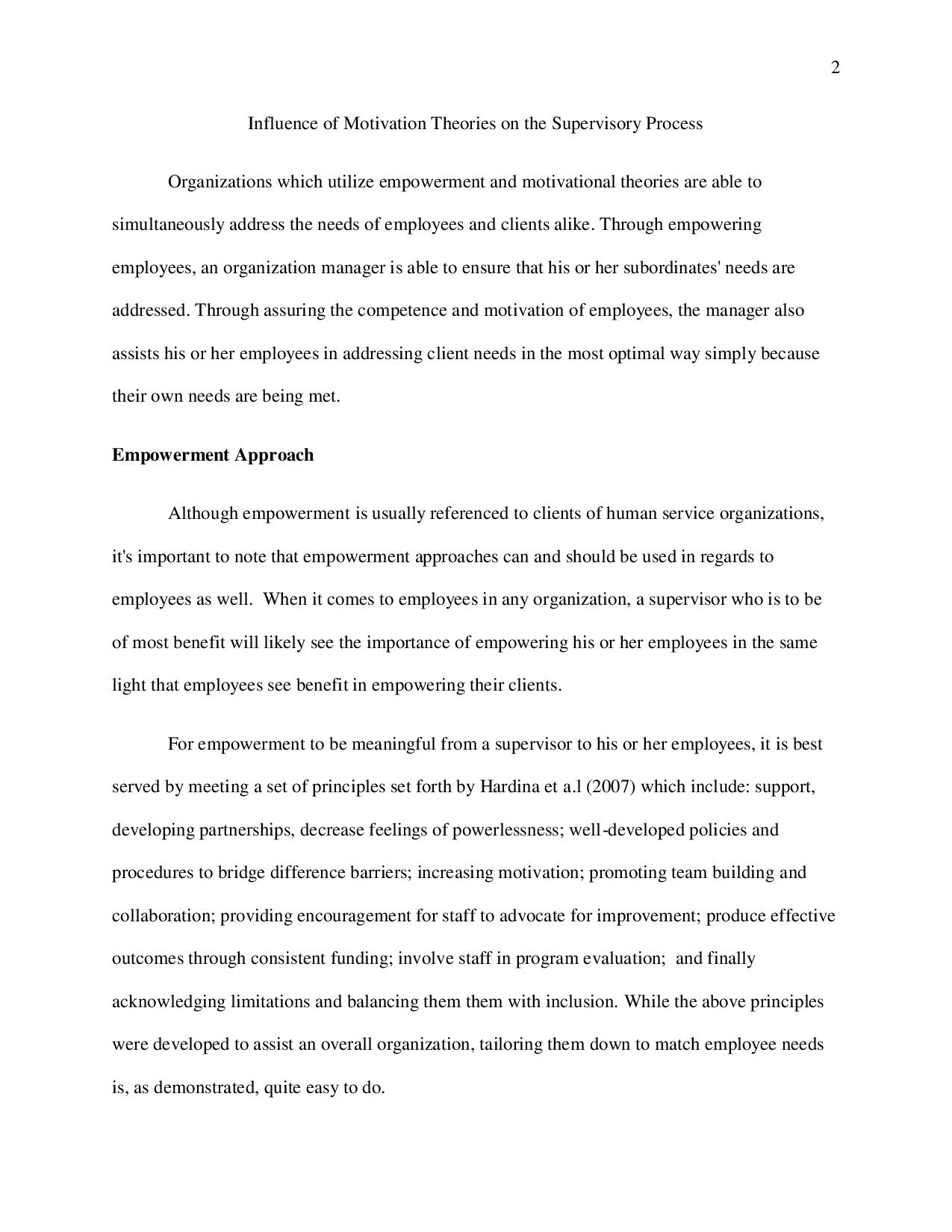
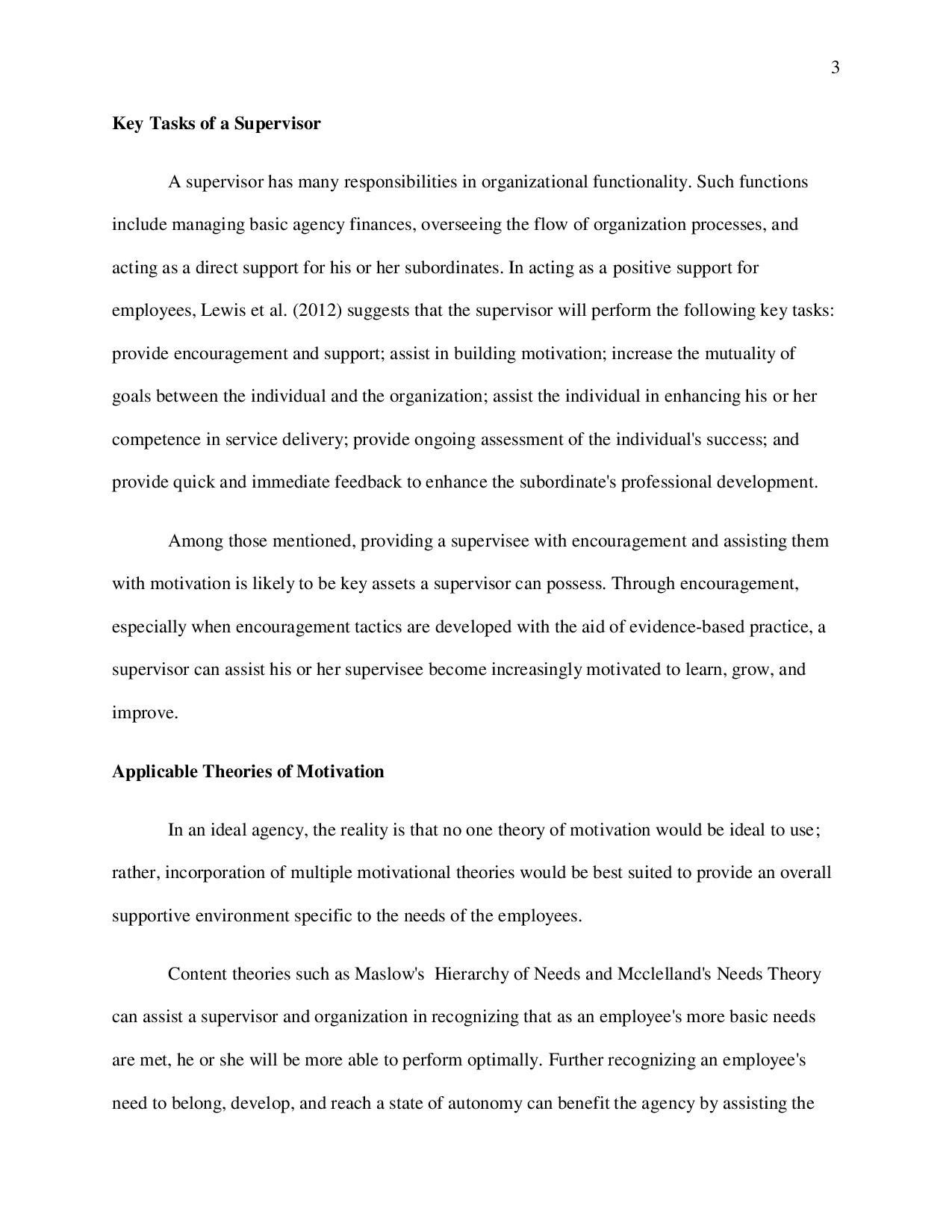
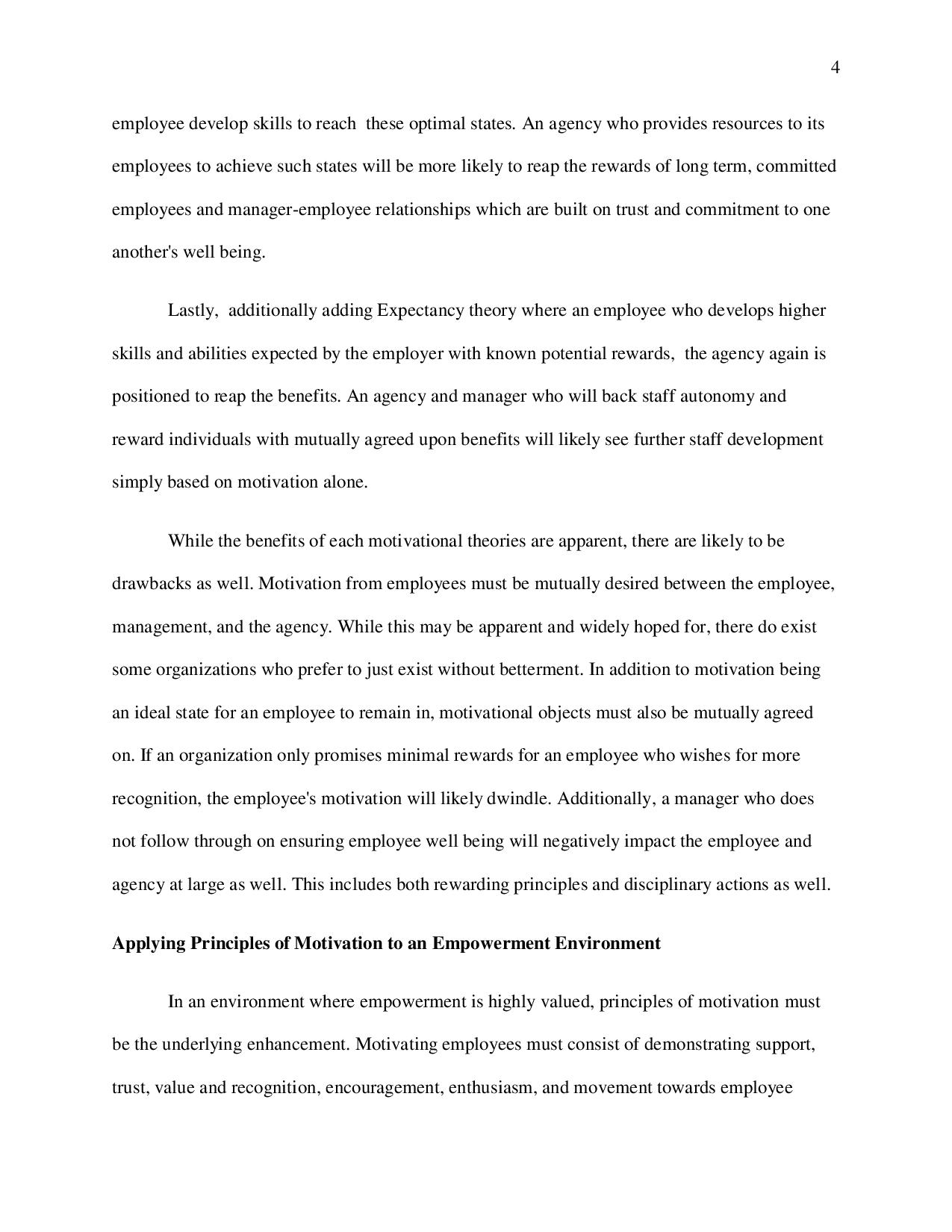
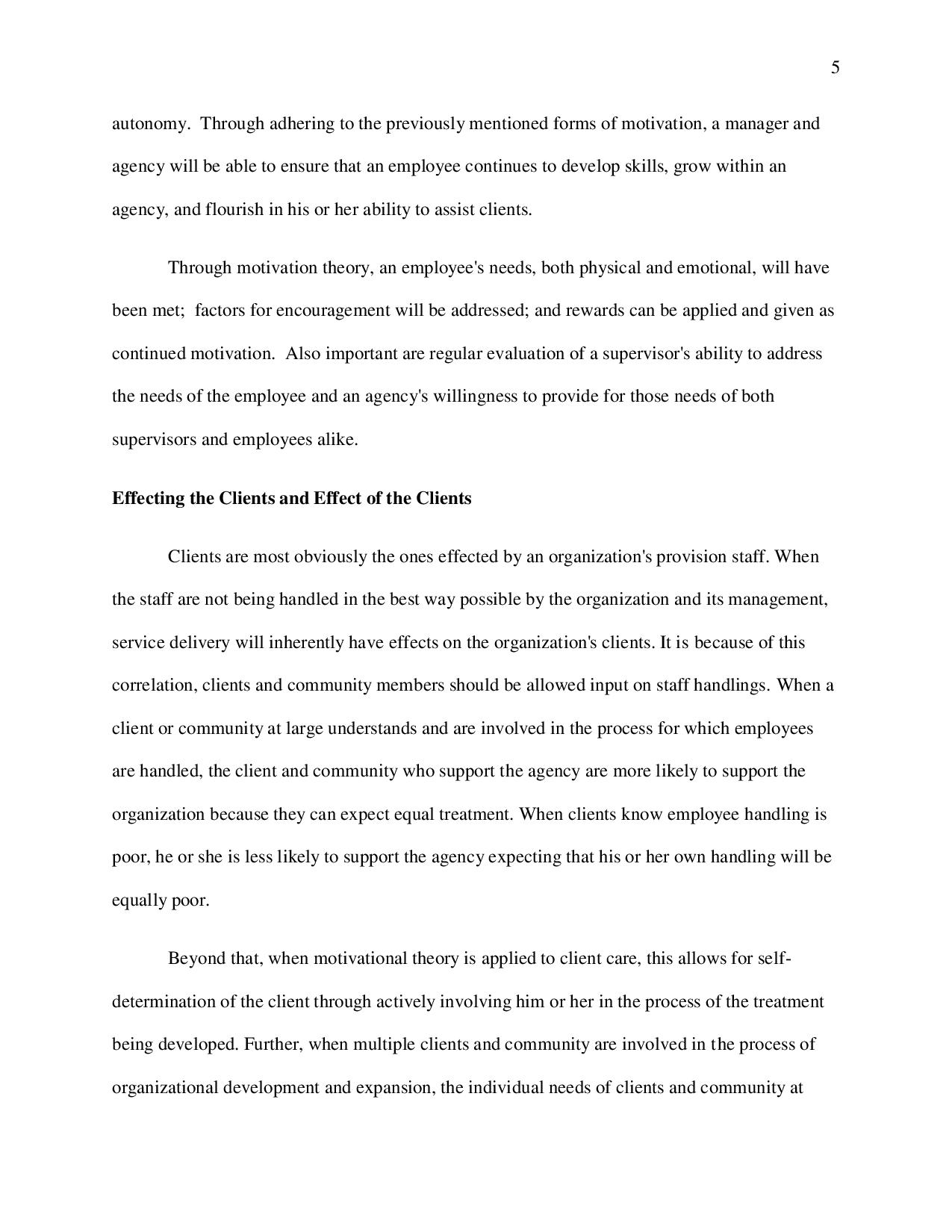
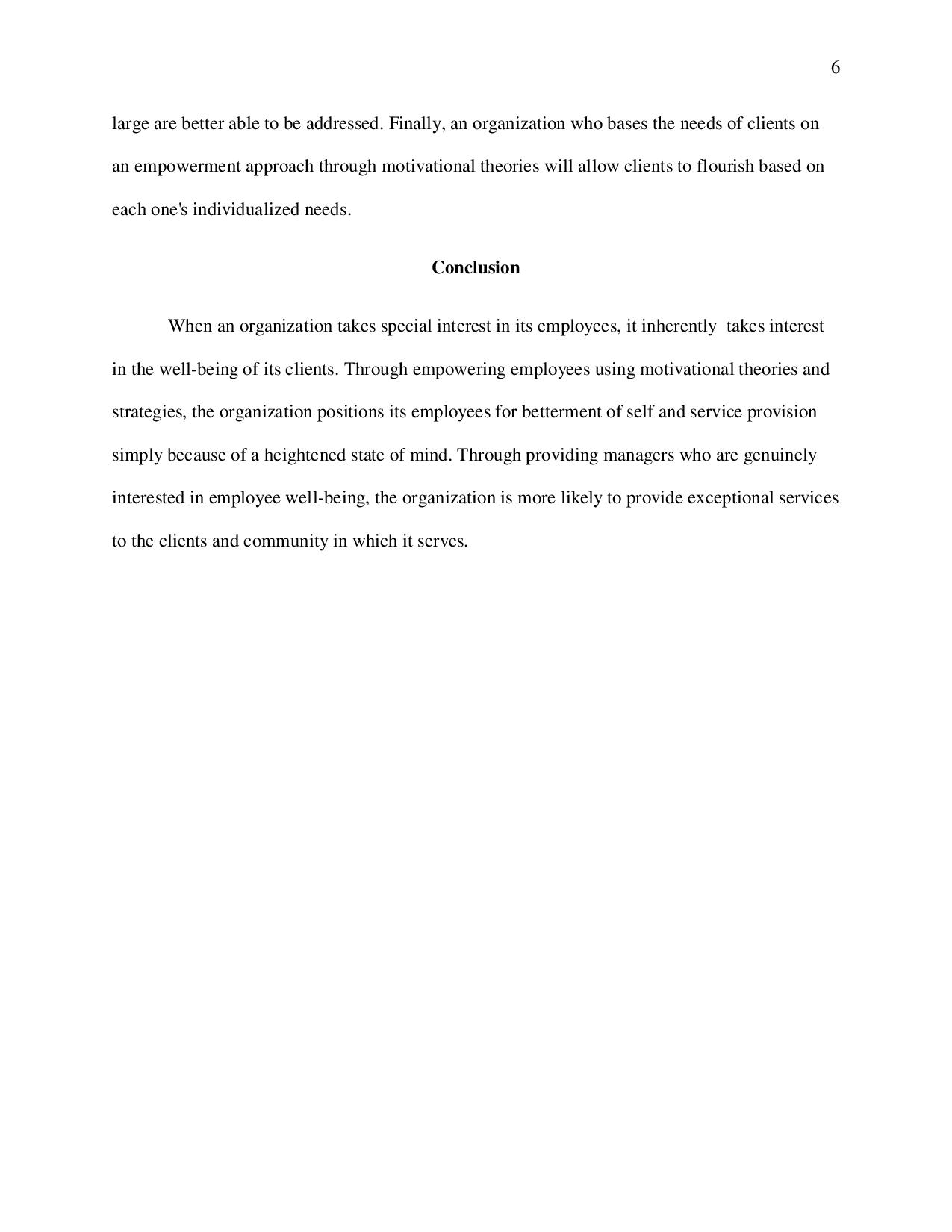
Write a 1,050- to 1,400-word paper that presents how key elements of the supervisory process are influenced by theories of motivation. Consider how this information may be applied within the Learning Team's ideal organization.
- Clarify the salient roles of the supervisor who draws from an empowerment approach to achieve organizational effectiveness.
- Provide a brief overview of the theories of motivation presented in the textbook that will work best in the development of you ideal organization.
- Discuss why these strategies were selected. Specifically, what are the anticipated benefits? What are the anticipated challenges?
- Identify how the principles of motivation will be applied in an empowerment environment.
- Explain how motivation theory supports an organizational culture wherein clients play the role of collaborative, active participants in agency decision-making processes.
Week 5: Leadership, Change, & Effective Management in Human Service Programs: An Emphasis on Organizational Efficacy
Organizational Change & Leadership from a Systems Perspective
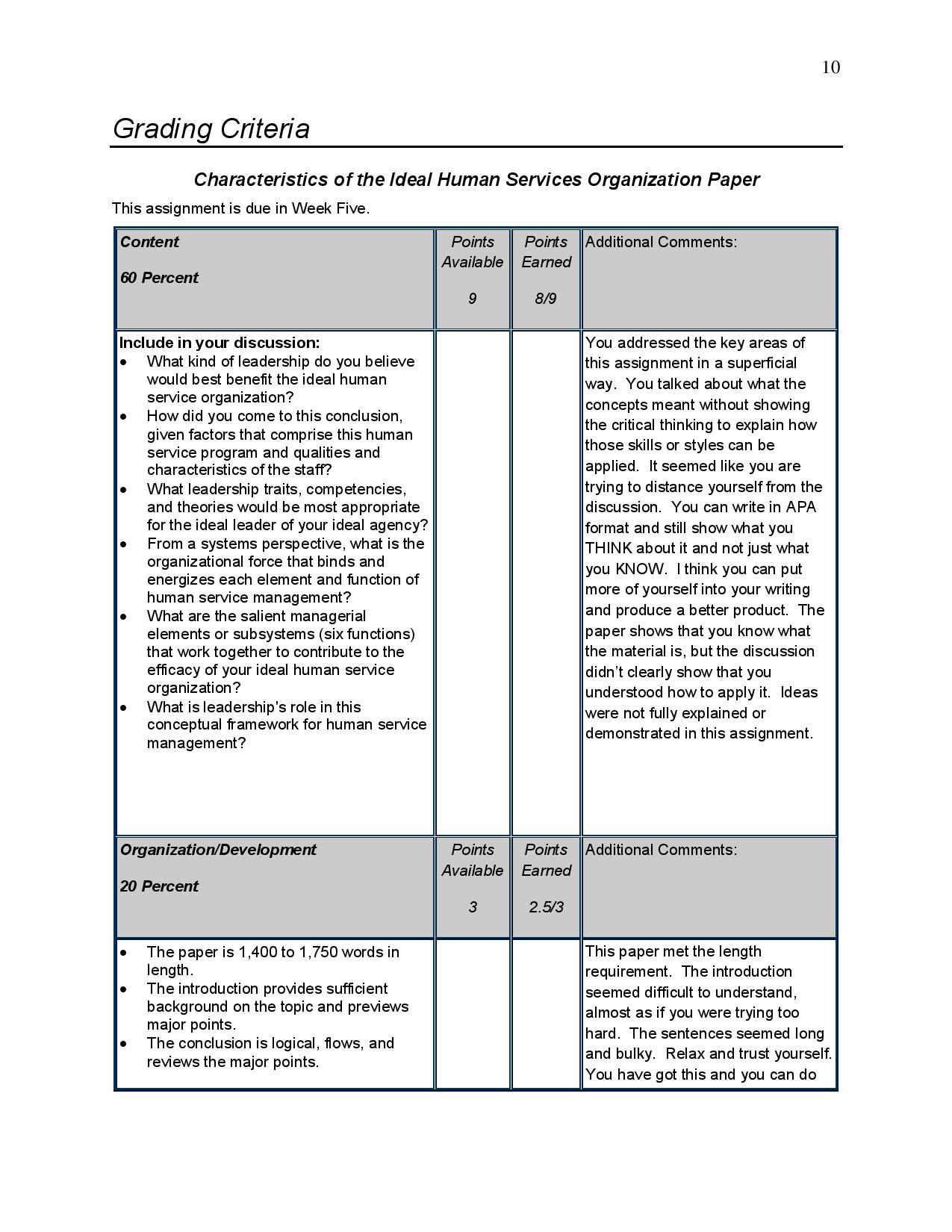
Write a 1,400-to 1,750-word paper that answers the following questions:
- What kind of leadership do you believe would best benefit the ideal human service organization?
- How did you come to this conclusion, given factors that comprise this human service program and qualities and characteristics of the staff?
- What leadership traits, competencies, and theories would be most appropriate for the ideal leader of your ideal agency?
- From a systems perspective, what is the organizational force that binds and energizes each element and function of human service management?
- What are the salient managerial elements or subsystems (six functions) that work together to contribute to the efficacy of your ideal human service organization?
- What is leadership's role in this conceptual framework for human service management?
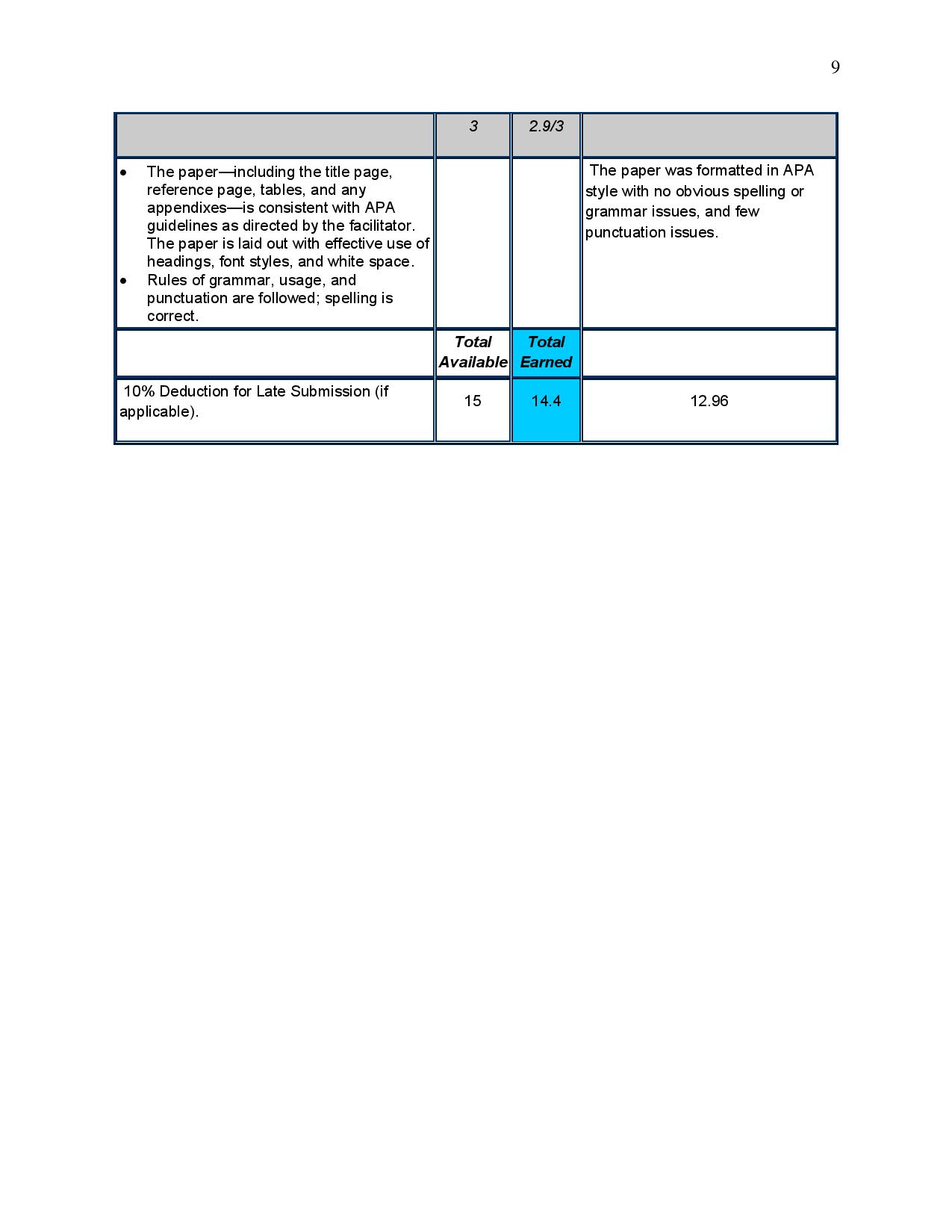
Final Grade: A-
Christina Aguilera, Lil' Kim, Mya, Pink - Lady Marmalade.mp3